
EXPLORING JAPAN THROUGH FASHION: MY JOURNEY WITH THREE VISIONARY DESIGNERS
28/07/2025
When I traveled to Japan, I didn’t just encounter breathtaking landscapes, serene temples, and vibrant cityscapes—I also stepped into a world where tradition and innovation intertwine seamlessly in fashion. During my trip, I immersed myself in the works of three influential Japanese designers: Yoshiki Hishinuma, Issey Miyake, and Yohji Yamamoto. Each of them embodies a unique approach to creativity while still reflecting the essence of Japanese aesthetics.
Yoshiki Hishinuma – Experiments in Textiles
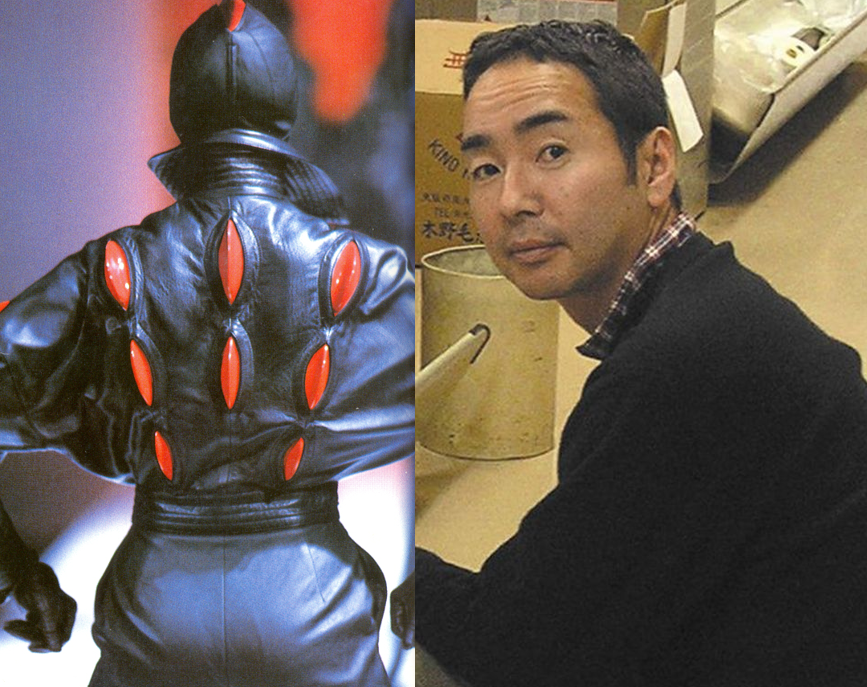
Yoshiki Hishinuma FW 1990 Yoshiki Hishinuma
Yoshiki Hishinuma’s creations are nothing short of textile experiments brought to life. As described in Fashion Designers A–Z, his clothes are “the result of his textile-technical experiments.” The fabrics themselves feel so layered and intricate that they demand your full attention. When Hishinuma couldn’t find the materials he envisioned, he began experimenting with both natural and chemical processes to alter the finish and form of synthetic fibers according to his own ideas.
The result is fashion full of volume, extravagance, and detail—pieces that ask the eye to slow down and absorb every fold and surface. And yet, despite their modernity, you can often glimpse traditional elements, like garments echoing the silhouette of a kimono. Hishinuma studied at the Bunka Fashion College in Tokyo and worked as an assistant to Issey Miyake before launching his own label in 1992. Standing in front of his designs, I felt as though past and future were woven into every thread.
Issey Miyake – The Spirit of Innovation
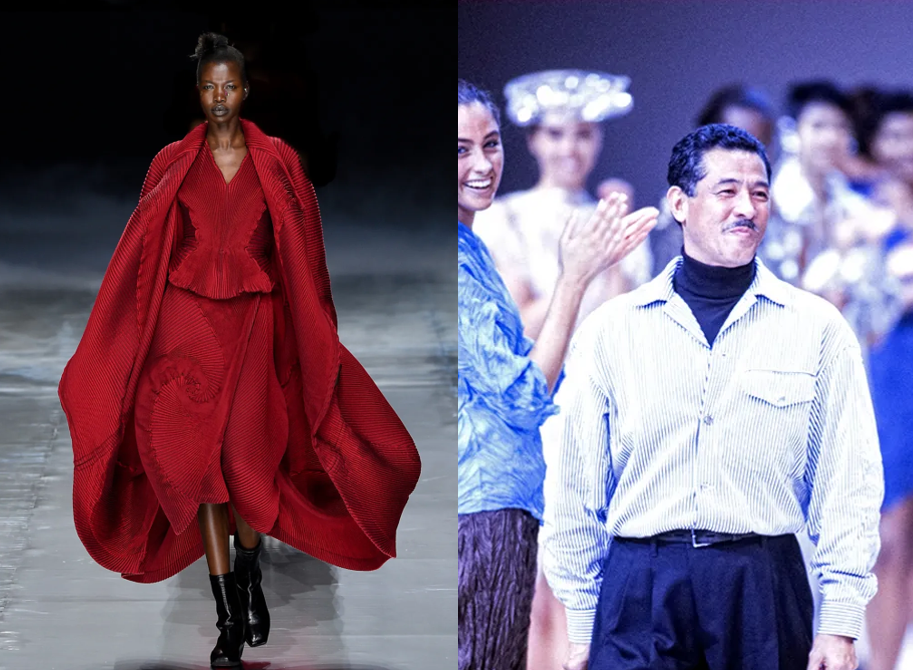
Issey Miyake's Fall-Winter 2016-17 fashion show in Paris Issey Miyake during his Spring-Summer 1992 fashion show in Paris
Issey Miyake is a household name in the world of fashion, known for his constant pursuit of innovation. As Fashion Designers A–Z highlights, he was among the first world-renowned designers to creatively embrace the latest high-tech synthetic fabrics produced in Japan. He also foresaw the growing importance of ready-to-wear clothing at a time when the industry still leaned heavily on couture.
Miyake’s work has always carried a future-oriented, optimistic vision. In the late 1980s, he introduced his iconic pleated creations—flat pieces of fabric that transform into three-dimensional, geometric forms once worn. These designs feel as contemporary today as they did decades ago. Miyake himself once said: “Clothes are of no interest except insofar as they provoke sentiments and reactions in those who wear them…” And indeed, when I encountered his work in Japan, I couldn’t help but feel a sense of joy and curiosity that went beyond fashion—it was about the art of living.
Yohji Yamamoto – Poetic Deconstruction
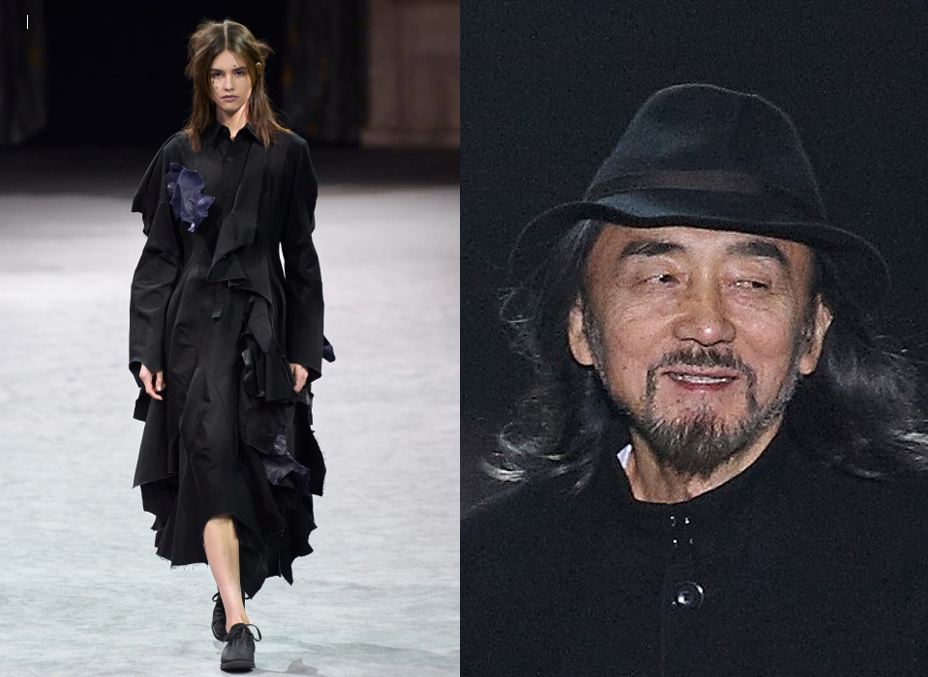
Yohji Yamamoto Fall 2023 Yamamoto, February 2010
Yohji Yamamoto’s designs strike a balance between lyrical romance and dark deconstruction. His aesthetic often draws comparisons to Rei Kawakubo, though his work is less conceptual and more grounded in technical brilliance. Yamamoto is fascinated by reinterpreting historical Western clothing, reshaping it through an avant-garde lens.
Since the mid-1990s, his collections have often carried a romantic, almost poetic quality—dreamlike garments that evoke emotion. At the same time, he remains renowned for his deconstructed, dark designs, which feel both radical and timeless. Standing in front of Yamamoto’s pieces, I understood why his fashion is often described as “dreamlike avant-garde.” It carries a haunting beauty, one that challenges the viewer while leaving space for imagination.
Recap
In the end, my journey through Japan was as much about fashion as it was about culture. Experiencing the works of Hishinuma, Miyake, and Yamamoto showed me how deeply creativity is woven into the fabric of Japan—where innovation meets tradition, and clothing becomes a reflection of life itself.

xoxo Kyu